
Specialist Grouting Techniques
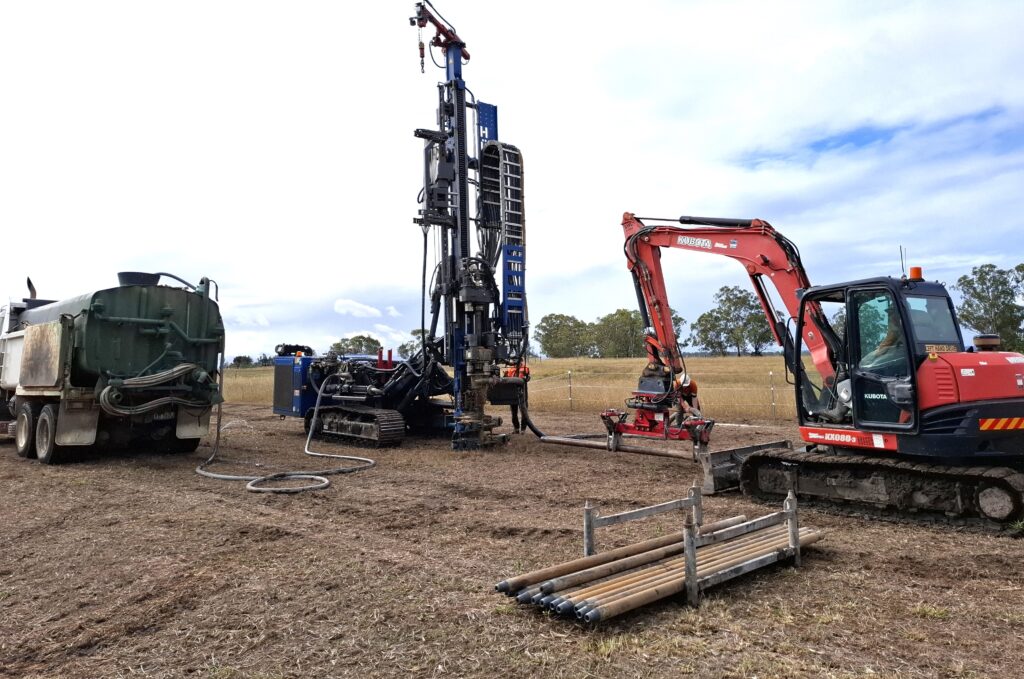
Rock grouting involves the injection of cementitious or chemical grout into fractures, joints, bedding planes, and voids within rock masses to improve strength, stiffness, and hydraulic performance.
Unlike soil grouting, the process targets discrete discontinuities rather than pore spaces, forming grout-filled networks that reduce permeability, improve rock mass continuity, and enhance load-bearing capacity.
The process includes detailed drilling, borehole cleaning, and staged pressure-controlled injection to ensure grout penetrates targeted fractures without causing hydro-fracturing or damage to the surrounding rock structure.
Rock grouting is most effective in competent to moderately weathered rock masses where fractures, seams, or karst features control groundwater flow or structural stability.
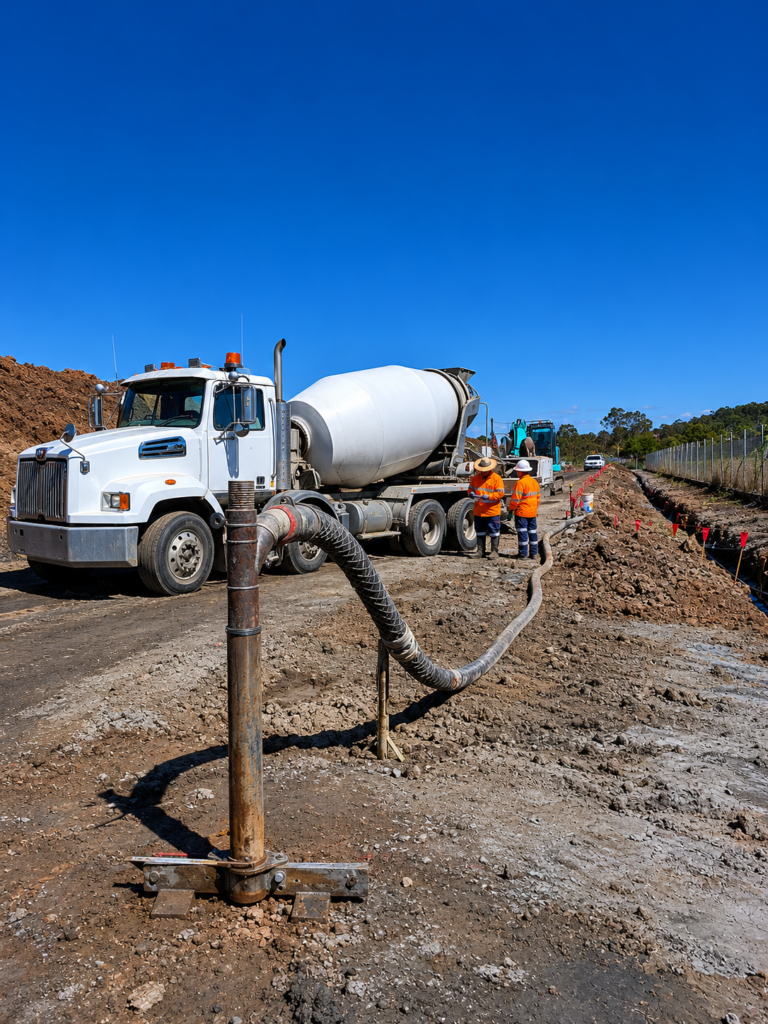
Permeation grouting involves injecting low-viscosity cementitious or chemical grout into granular soils at controlled low pressures, so it flows into the natural pore spaces without fracturing or displacing the soil. This produces a cemented soil matrix with significantly improved strength, stiffness, and hydraulic control, while maintaining the natural soil fabric.
Permeation is particularly effective in sands, gravels, and silty sands where binder penetration is achievable.
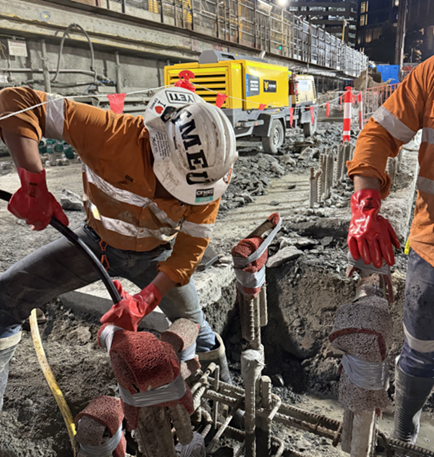
Compaction grouting uses a stiff, low-mobility grout injected under pressure to create controlled bulbs that displace surrounding soil. The result is increased density, stiffness, and bearing capacity.
The injection pipe is raised in increments (stage lifting) to form a continuous improvement column through controlled bulb formation and soil displacement.
It is one of the most reliable and controllable methods for densifying loose fills, sands, and voided subsurface materials.
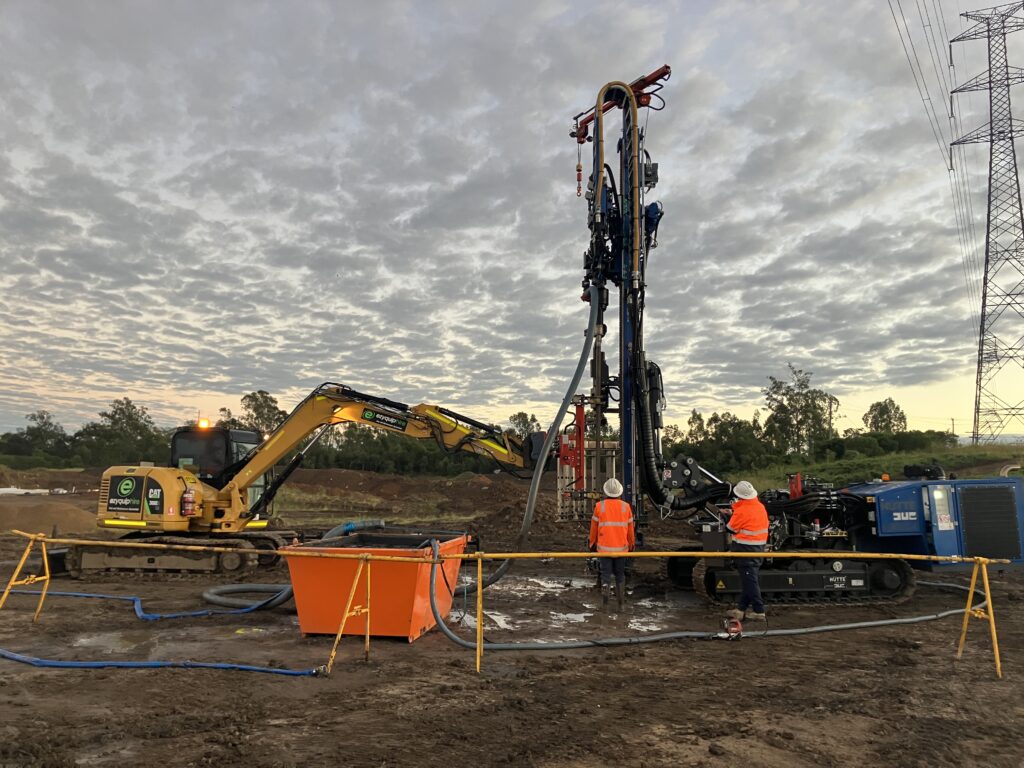
Fracture grouting involves injecting grout at controlled pressures to deliberately create engineered soil fractures, forming thin grout lenses that propagate horizontally or radially within the soil mass.
These grout fractures increase shear strength, reduce compressibility, and can be used to actively control or counteract ground settlement caused by nearby tunnelling or excavation activities.
Fracture grouting is particularly effective in silts, clays, and mixed soil conditions where permeation or compaction grouting methods are not suitable.
Mine Remediation
Underpinning existing structures
Sinkhole remediation
Filling underground voids and cavities
Tunnel and Shaft water sealing
Dam foundation grouting
Curtain Grouting
Seepage and Groundwater Control
Dynamic Ground Solutions Australia (DGSA) delivers a comprehensive suite of advanced grouting techniques designed to improve ground strength, control groundwater, stabilise voids, and enhance foundation performance across civil, mining, transport, energy, and industrial projects. These solutions combine engineering expertise, specialised equipment, and advanced operational controls to deliver predictable and verifiable geotechnical outcomes across a wide range of ground conditions.
Our Clients