Rigid Inclusions
Rigid inclusions (RIs) are high-stiffness columns installed in soft or compressible soils to reduce settlement, increase stiffness, and improve bearing capacity. They act together with a Load Transfer Platform (LTP) to distribute loads between inclusions and surrounding ground.
Rigid inclusions are not piles and do not rely on end bearing. Instead, they function by improving overall ground stiffness and controlling settlement response.
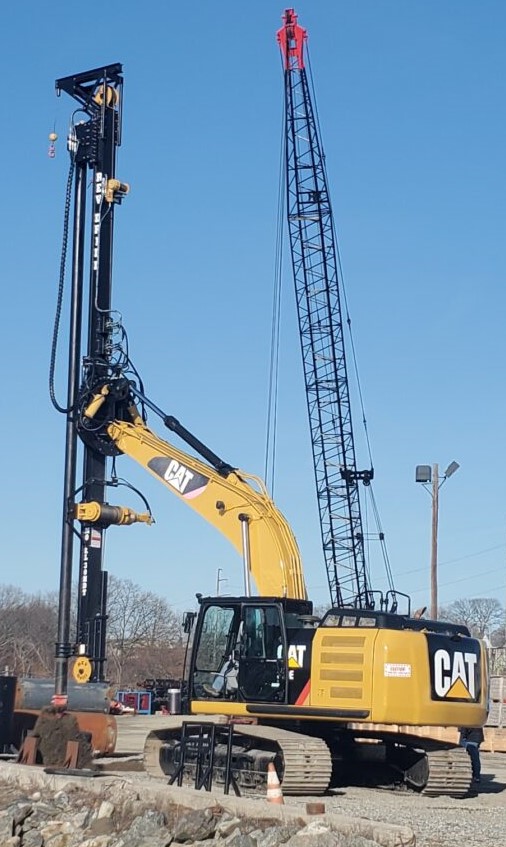
They are commonly installed using concrete or grout columns with displacement or drilling-based installation methods depending on ground conditions.
Industrial Buildings & Warehouses
Tanks & Silos
Roads, Rail & Embankments
Port & Marine Infrastructure
Residential & Civil Subdivisions
Mining & Industrial Facilities
Rigid inclusions are a high-value, high-efficiency ground improvement solution for reducing settlement and increasing stiffness in soft or compressible soils. DGSA’s advanced DSM technologies, jet-assisted mixing, binder optimisation, and engineered load-transfer platforms provide highly reliable, repeatable, and cost-effective outcomes across industrial, residential, transport, and mining projects.
DGSA’s innovation in hybridising rigid inclusions with dynamic compaction, mass mixing, compaction grouting, and other ground improvement systems ensures maximum flexibility and performance in complex geotechnical environments.
Our Clients