
Dynamic Replacement
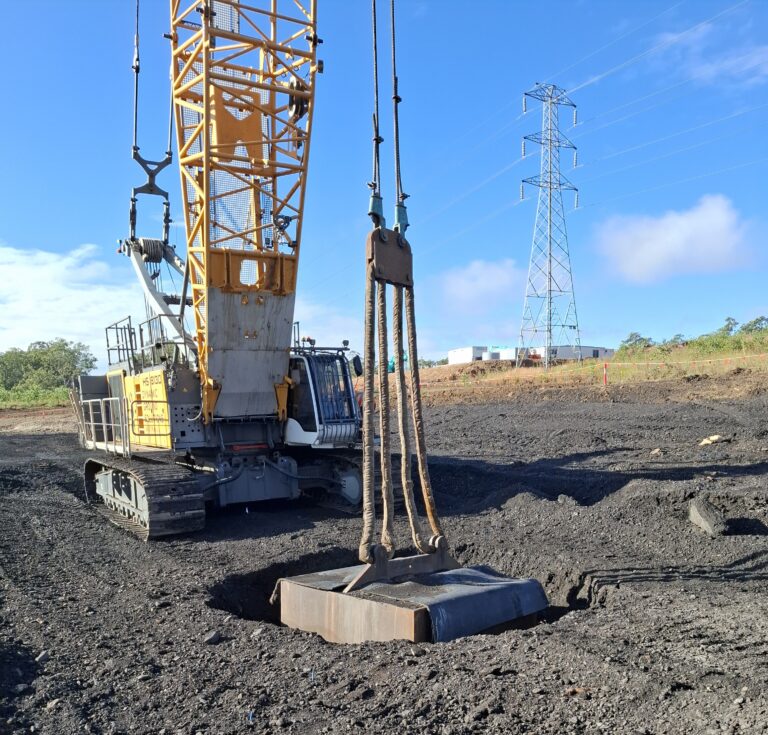
The process begins with establishment works, including impact grid layout, access preparation, and selection of the appropriate pounder weight, drop height, and stone type. A crane lifts a high-mass pounder (typically 15–30 tonnes) and releases it in a controlled series of drops at designated column locations.
Each impact:
• Drives the pounder into the ground
• Displaces weak soil outward
• Creates a deep cavity
• Allows placement of granular stone
Granular material is placed in layers into the crater and compacted by further pounding, forming a stone column with the required diameter and depth. The installed column is constructed until the design elevation is reached.
Treatment of Soft Soils
Infrastructure Platforms
Settlement Reduction
Ground Redevelopment
Mining Applications
Dynamic replacement is a powerful ground improvement technique capable of transforming soft or compressible ground into stable, load-bearing platforms suitable for major industrial, commercial, and infrastructure development.
By combining deep soil displacement with the construction of large stone columns, the method delivers exceptional settlement control and increased bearing capacity at a fraction of the cost of deep foundations or full excavation and replacement.
DGSA delivers dynamic replacement using advanced pounder systems, energy-optimised column patterns, and integrated settlement monitoring to ensure reliable, data-driven outcomes across all ground conditions.
The result is a high-performance ground solution that supports heavy infrastructure, improves long-term stability, and enables construction on sites previously considered unsuitable for development.
Our Clients